Sliding Doors For Furniture
Furniture sliding doors are elegant and convenient. They open in a space-saving way and are therefore suitable even in narrow room situations. OSTERMANN offers you many sliding door systems for different applications and door formats - from small sideboards to floor-to-ceiling wardrobes. Before choosing the sliding door fitting, we would first like to show you the makeup of a sliding door system for furniture.
What Components Does a Sliding Door System for Furniture Include?
All sliding door systems are basically constructed the same way. They comprise the following components:
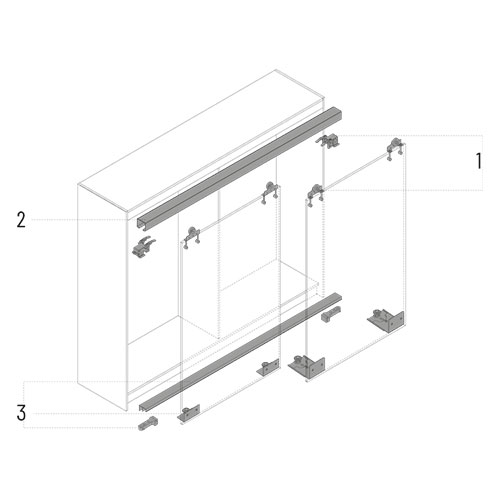
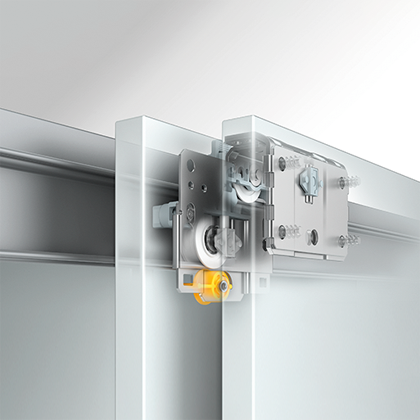
Running components (1) and runner profile (2)
The running components are the heart of any sliding door system. For top-running systems, they are installed on the top edge of the sliding door. For bottom-running systems, they are installed on the bottom edge. Every system includes end stops for the runner profile, which stop the door.
Guide components and guide rail (3)
The guide rail guides the movement of the sliding door and stabilises it. The guide components move within the guide rail and are installed on the top edge of the sliding door for top-running systems. And for bottom-running systems, they are installed on the bottom edge.
Door damper (optional)
Standardly, damping components for gently catching the door are available for every system.
The Matching Sliding Door Fittings for Your Furniture
It is not very difficult to find the right fittings for sliding doors. We explain the most important criteria and help you to find the matching fittings.
Before choosing the fitting ...
... it is necessary to determine the format of the sliding door. The format determines the correct system. Please consider that wide doors are a lot more stable than narrow, tall sliding doors. A rule of thumb is: the width of the sliding door should be at least half of the sliding door height. Also consider the minimum and maximum door height It is provided for each system and should be adhered to.
Position of the Running Components
Bottom-running vs. Top-running
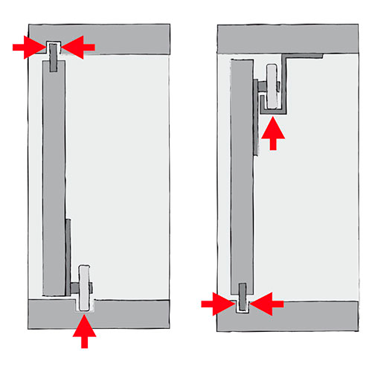
For bottom-running sliding door systems, the running components are installed on the bottom edge of the sliding door while the top edge is stabilised by the guide components. These fittings for sliding doors can be found in our SlideLine product group. Bottom-running systems are particularly suitable for small, light-weight sliding doors.
Top-running sliding doors are held in place by the suspension mechanism on the carcass top. The guide rail on the bottom shelf prevents swinging of the door. Top-running sliding door systems such as the TopLine system are ideal for large and heavy doors.
Position of the Sliding Doors: Overlay or Inset?
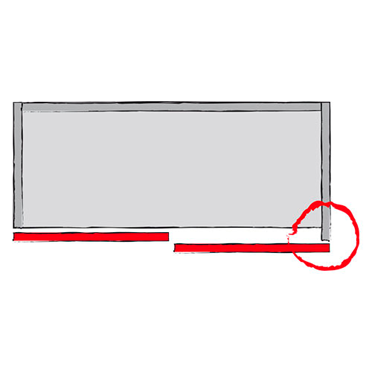
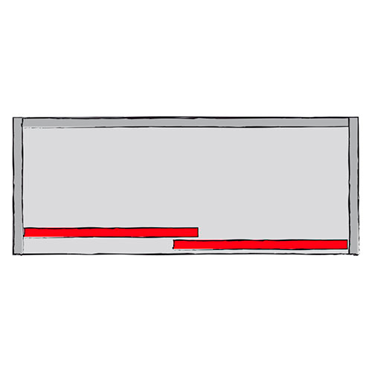
Overlay sliding doors move in front of the carcass sides, top and bottom. The carcass sides must have a different depth measurement.
Inset sliding doors on the other hand move between the carcass sides, top and bottom. The carcass sides must have an identical depth measurement.
When Do I Pick Which Version?
Overlay sliding doors are especially suitable for larger cabinets. They have the following advantages:
- The fronts are the most noticeable design element of the furniture, since they cover the front of the carcass as well as the top and bottom
- More space in the carcass thanks to overlay doors
Inset sliding doors are more suitable for less heavy applications such as the office or kitchen. These are your benefits:
- The depth measurements of the carcass sides are identical = easier assembly
- Cost-effective entry-level version
Load Capacity of the Fittings for Sliding Doors
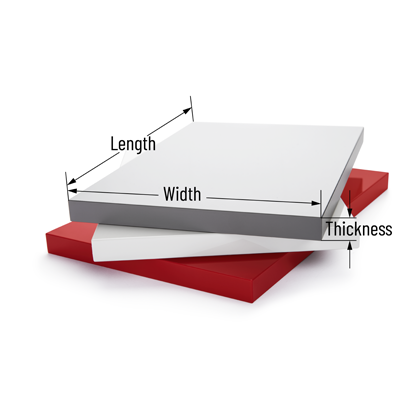
The sliding door of a small sideboard is significantly lighter than the solid wooden door of a floor-to-ceiling wardrobe. To ensure that the fitting can carry the required load, you need to consider the weight of the door before choosing the fitting. With our board weight calculator, you can calculate this very easily.